RWA
Real-World Assets Meet Decentralized Finance
The Missing Link in DeFi
Decentralized finance has achieved remarkable things in a short time. Lending protocols allow users to earn yield on their assets without traditional financial intermediaries. Decentralized exchanges provide liquidity and price discovery without centralized market makers. Stablecoins offer digital payments with the convenience of cryptocurrency and the stability of fiat currencies. The DeFi ecosystem has demonstrated that significant financial infrastructure can be built on blockchain technology, operating transparently and accessibly in ways that traditional finance cannot match.
Yet DeFi has a significant gap: it is almost entirely disconnected from the real economy. The trillions of dollars in real estate, the billions in private credit, the vast market for commodities and other physical assets—these remain largely inaccessible to DeFi users. The yields available in DeFi, while attractive by crypto standards, are modest compared to the returns available in traditional asset classes. The diversification benefits that come from holding non-correlated assets are unavailable because DeFi protocols operate only with digital assets whose values often move together.
This gap represents both a limitation and an opportunity. The limitation is that DeFi users are confined to a subset of available assets, unable to access the diversification and return potential of real-world investments. The opportunity is that whoever successfully bridges DeFi with real-world assets can unlock enormous value for their users while capturing a significant market opportunity. This is the opportunity that Uishi is pursuing through its real-world asset pillar.
Understanding Real-World Asset Tokenization
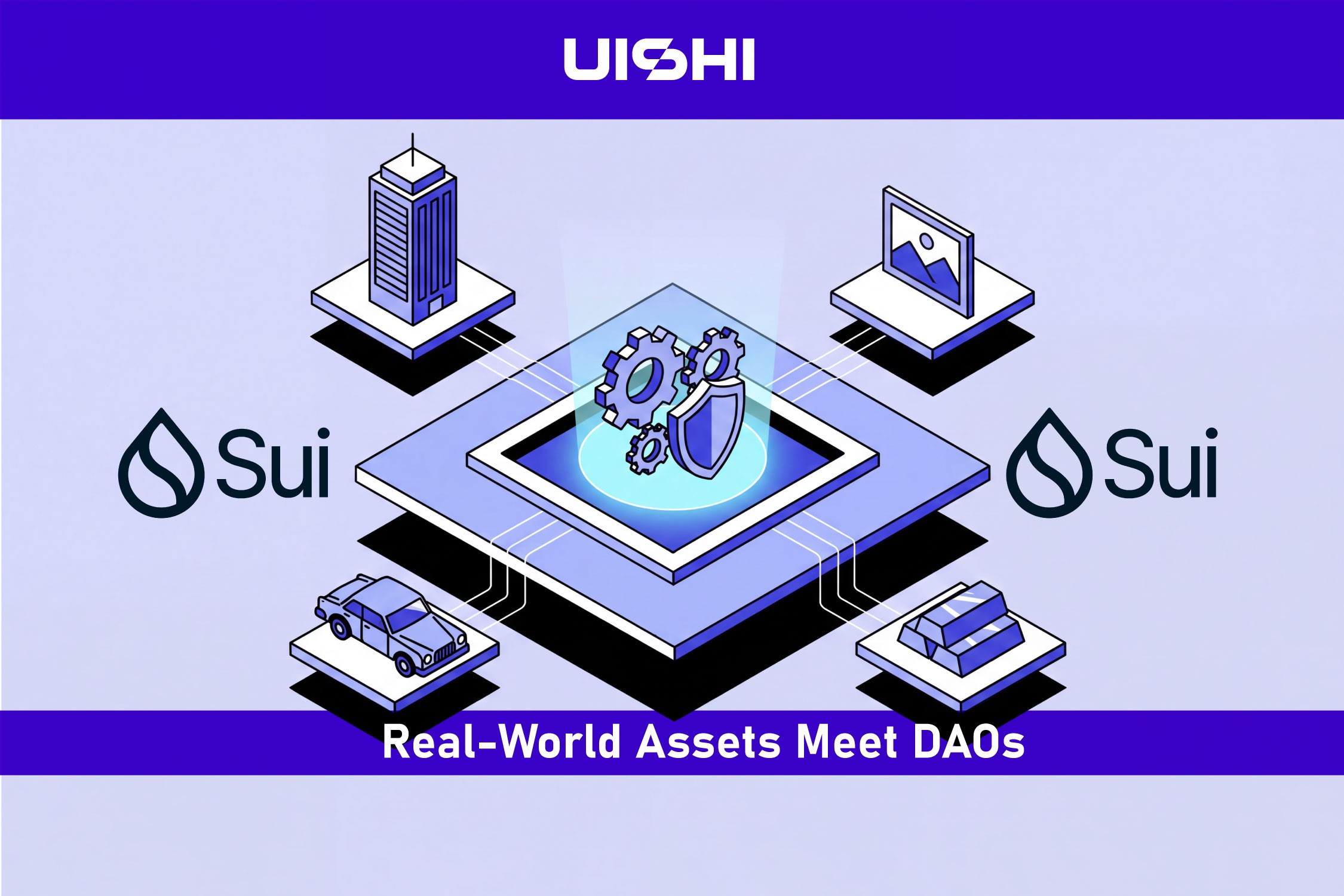
Real-world asset tokenization is the process of representing ownership of physical or traditional financial assets on a blockchain. The basic concept is straightforward: an off-chain entity owns the real asset, while on-chain tokens represent ownership shares in that entity. The tokens can be bought, sold, and transferred like any other cryptocurrency, while the underlying asset provides the economic value that the tokens represent. This structure combines the liquidity and programmability of blockchain with the real economic value of traditional assets.
Tokenization offers several advantages over traditional ownership structures. Fractionalization enables access to assets that would otherwise require large minimum investments, allowing many small investors to participate in assets like commercial real estate that are typically reserved for institutional buyers. Liquidity enables trading of ownership shares without the delays and friction of traditional asset sales, as transactions settle on-chain within minutes rather than requiring weeks of closing procedures. Transparency ensures that ownership records are publicly verifiable and that all transactions are recorded on an immutable ledger. Programmability enables automated distribution of income, conditional transfer rules, and other features that would be difficult or expensive to implement through traditional legal structures.
The market for tokenized real-world assets has already reached significant scale, with over thirty-five billion dollars currently tokenized on various blockchain platforms. Projections suggest the market could reach five hundred billion dollars or more as the infrastructure matures and regulatory clarity improves. Early movers in RWA tokenization are establishing positions that will be valuable as the market grows, creating first-mover advantages that late entrants will struggle to overcome.
Uishi’s RWA Strategy
Uishi’s approach to real-world assets focuses on three primary asset classes that offer attractive risk-adjusted returns while being well-suited to tokenization: private credit, real estate, and commodities. Each of these asset classes has distinct characteristics that complement DeFi-native strategies, and together they provide diversification benefits that reduce portfolio volatility while enhancing returns.
Private credit, including business loans, invoice financing, and merchant cash advances, offers yields in the eight to twelve percent range with relatively predictable cash flows. Unlike crypto-native lending, which is often highly correlated with cryptocurrency prices, private credit returns are tied to the performance of real businesses. This low correlation provides genuine diversification that reduces overall portfolio risk. Private credit also has relatively simple legal structures that make compliance manageable, making it an appropriate starting point for Uishi’s RWA expansion.
Real estate tokenization provides access to commercial property investments that have historically been reserved for large institutional investors. Rental income provides steady yield, while property appreciation provides potential for capital gains. The illiquidity premium in real estate—the additional return investors receive for accepting locked-up capital—can be captured by DeFi-native strategies while the real estate itself provides stable value. Uishi will focus on commercial properties in secondary markets where valuations may be more attractive and due diligence more manageable than in major markets.
Commodities, particularly precious metals, provide inflation hedging and store-of-value properties that complement the growth orientation of crypto-native strategies. Gold and silver have preserved value across centuries and market cycles, providing portfolio protection during periods of crypto market stress. Tokenized commodities eliminate the storage and custody challenges of physical ownership while providing the same economic exposure. This defensive positioning reduces overall portfolio volatility while maintaining upside potential.
The Treasury Flywheel
The real power of Uishi’s RWA strategy comes from its integration with the other pillars of the platform. RWA investments do not stand alone; they interact with DeFi strategies and membership systems to create value multipliers that would be impossible with any single approach.
The treasury flywheel works as follows: DeFi yields generate returns that provide capital for RWA acquisitions. RWA positions, in turn, serve as collateral that enables additional DeFi leverage, amplifying returns on the DeFi portion of the portfolio. The combination of DeFi and RWA returns exceeds what either approach could achieve alone, while the diversification reduces risk below what either approach would have individually. Members benefit from the whole system, not just from isolated components.
This integration also creates operational synergies. RWA investments require capital; DeFi yields provide that capital. DeFi strategies benefit from collateral capacity; RWA positions provide that collateral. The two pillars reinforce each other, creating compounding benefits that grow over time. The whole is greater than the sum of the parts, and that difference is where Uishi creates value.
Legal and Compliance Framework
Operating with real-world assets requires navigating complex legal and regulatory requirements that do not apply to purely on-chain activities. Uishi has invested significantly in building a legal framework that enables RWA operations while maintaining compliance across relevant jurisdictions.
The structure involves off-chain legal entities, typically structured as limited liability companies or similar vehicles in appropriate jurisdictions, that hold the actual real-world assets. These entities are fully compliant with local regulations, including securities law where applicable. On-chain tokens represent ownership interests in these legal entities, with smart contracts enforcing the same economic relationships that would be enforced through traditional legal documents. This structure provides the benefits of blockchain technology—liquidity, transparency, programmability—while maintaining the legal enforceability that real-world assets require.
Kiosk, SUI’s native asset management system, provides technical infrastructure for sophisticated custody arrangements. Assets can be fractionally owned, transferred conditionally, or managed through multi-signature arrangements, all with native protocol support. This infrastructure reduces the custom development that would otherwise be required, enabling faster time to market with lower technical risk.
Compliance is not a one-time achievement but an ongoing responsibility. Uishi maintains relationships with legal counsel across relevant jurisdictions, monitors regulatory developments, and adapts operations as requirements evolve. The goal is to enable RWA access while managing compliance burden, providing members with exposure to real-world assets without exposing the platform to regulatory risk.
The Future of RWA
The tokenization of real-world assets is still in its early stages, with much of the potential still unrealized. As infrastructure matures and regulatory clarity improves, the range of tokenizable assets will expand, and the efficiency of tokenization will improve. Uishi is positioning itself to participate in and contribute to this ongoing development, building capabilities today that will scale with the market.
The convergence of DeFi and traditional finance is one of the most significant trends in the broader financial system. Uishi’s RWA pillar positions the platform to benefit from this convergence while providing members with access to opportunities that have traditionally been reserved for large institutional investors. Real wealth, real ownership, real future—this is what Uishi is building through its real-world asset strategy.
The Missing Link in DeFi
Decentralized finance has achieved remarkable things in a short time. Lending protocols allow users to earn yield on their assets without traditional financial intermediaries. Decentralized exchanges provide liquidity and price discovery without centralized market makers. Stablecoins offer digital payments with the convenience of cryptocurrency and the stability of fiat currencies. The DeFi ecosystem has demonstrated that significant financial infrastructure can be built on blockchain technology, operating transparently and accessibly in ways that traditional finance cannot match.
Yet DeFi has a significant gap: it is almost entirely disconnected from the real economy. The trillions of dollars in real estate, the billions in private credit, the vast market for commodities and other physical assets—these remain largely inaccessible to DeFi users. The yields available in DeFi, while attractive by crypto standards, are modest compared to the returns available in traditional asset classes. The diversification benefits that come from holding non-correlated assets are unavailable because DeFi protocols operate only with digital assets whose values often move together.
This gap represents both a limitation and an opportunity. The limitation is that DeFi users are confined to a subset of available assets, unable to access the diversification and return potential of real-world investments. The opportunity is that whoever successfully bridges DeFi with real-world assets can unlock enormous value for their users while capturing a significant market opportunity. This is the opportunity that Uishi is pursuing through its real-world asset pillar.
Understanding Real-World Asset Tokenization
Real-world asset tokenization is the process of representing ownership of physical or traditional financial assets on a blockchain. The basic concept is straightforward: an off-chain entity owns the real asset, while on-chain tokens represent ownership shares in that entity. The tokens can be bought, sold, and transferred like any other cryptocurrency, while the underlying asset provides the economic value that the tokens represent. This structure combines the liquidity and programmability of blockchain with the real economic value of traditional assets.
Tokenization offers several advantages over traditional ownership structures. Fractionalization enables access to assets that would otherwise require large minimum investments, allowing many small investors to participate in assets like commercial real estate that are typically reserved for institutional buyers. Liquidity enables trading of ownership shares without the delays and friction of traditional asset sales, as transactions settle on-chain within minutes rather than requiring weeks of closing procedures. Transparency ensures that ownership records are publicly verifiable and that all transactions are recorded on an immutable ledger. Programmability enables automated distribution of income, conditional transfer rules, and other features that would be difficult or expensive to implement through traditional legal structures.
The market for tokenized real-world assets has already reached significant scale, with over thirty-five billion dollars currently tokenized on various blockchain platforms. Projections suggest the market could reach five hundred billion dollars or more as the infrastructure matures and regulatory clarity improves. Early movers in RWA tokenization are establishing positions that will be valuable as the market grows, creating first-mover advantages that late entrants will struggle to overcome.
Uishi’s RWA Strategy
Uishi’s approach to real-world assets focuses on three primary asset classes that offer attractive risk-adjusted returns while being well-suited to tokenization: private credit, real estate, and commodities. Each of these asset classes has distinct characteristics that complement DeFi-native strategies, and together they provide diversification benefits that reduce portfolio volatility while enhancing returns.
Private credit, including business loans, invoice financing, and merchant cash advances, offers yields in the eight to twelve percent range with relatively predictable cash flows. Unlike crypto-native lending, which is often highly correlated with cryptocurrency prices, private credit returns are tied to the performance of real businesses. This low correlation provides genuine diversification that reduces overall portfolio risk. Private credit also has relatively simple legal structures that make compliance manageable, making it an appropriate starting point for Uishi’s RWA expansion.
Real estate tokenization provides access to commercial property investments that have historically been reserved for large institutional investors. Rental income provides steady yield, while property appreciation provides potential for capital gains. The illiquidity premium in real estate—the additional return investors receive for accepting locked-up capital—can be captured by DeFi-native strategies while the real estate itself provides stable value. Uishi will focus on commercial properties in secondary markets where valuations may be more attractive and due diligence more manageable than in major markets.
Commodities, particularly precious metals, provide inflation hedging and store-of-value properties that complement the growth orientation of crypto-native strategies. Gold and silver have preserved value across centuries and market cycles, providing portfolio protection during periods of crypto market stress. Tokenized commodities eliminate the storage and custody challenges of physical ownership while providing the same economic exposure. This defensive positioning reduces overall portfolio volatility while maintaining upside potential.
The Treasury Flywheel
The real power of Uishi’s RWA strategy comes from its integration with the other pillars of the platform. RWA investments do not stand alone; they interact with DeFi strategies and membership systems to create value multipliers that would be impossible with any single approach.
The treasury flywheel works as follows: DeFi yields generate returns that provide capital for RWA acquisitions. RWA positions, in turn, serve as collateral that enables additional DeFi leverage, amplifying returns on the DeFi portion of the portfolio. The combination of DeFi and RWA returns exceeds what either approach could achieve alone, while the diversification reduces risk below what either approach would have individually. Members benefit from the whole system, not just from isolated components.
This integration also creates operational synergies. RWA investments require capital; DeFi yields provide that capital. DeFi strategies benefit from collateral capacity; RWA positions provide that collateral. The two pillars reinforce each other, creating compounding benefits that grow over time. The whole is greater than the sum of the parts, and that difference is where Uishi creates value.
Legal and Compliance Framework
Operating with real-world assets requires navigating complex legal and regulatory requirements that do not apply to purely on-chain activities. Uishi has invested significantly in building a legal framework that enables RWA operations while maintaining compliance across relevant jurisdictions.
The structure involves off-chain legal entities, typically structured as limited liability companies or similar vehicles in appropriate jurisdictions, that hold the actual real-world assets. These entities are fully compliant with local regulations, including securities law where applicable. On-chain tokens represent ownership interests in these legal entities, with smart contracts enforcing the same economic relationships that would be enforced through traditional legal documents. This structure provides the benefits of blockchain technology—liquidity, transparency, programmability—while maintaining the legal enforceability that real-world assets require.
Kiosk, SUI’s native asset management system, provides technical infrastructure for sophisticated custody arrangements. Assets can be fractionally owned, transferred conditionally, or managed through multi-signature arrangements, all with native protocol support. This infrastructure reduces the custom development that would otherwise be required, enabling faster time to market with lower technical risk.
Compliance is not a one-time achievement but an ongoing responsibility. Uishi maintains relationships with legal counsel across relevant jurisdictions, monitors regulatory developments, and adapts operations as requirements evolve. The goal is to enable RWA access while managing compliance burden, providing members with exposure to real-world assets without exposing the platform to regulatory risk.
The Future of RWA
The tokenization of real-world assets is still in its early stages, with much of the potential still unrealized. As infrastructure matures and regulatory clarity improves, the range of tokenizable assets will expand, and the efficiency of tokenization will improve. Uishi is positioning itself to participate in and contribute to this ongoing development, building capabilities today that will scale with the market.
The convergence of DeFi and traditional finance is one of the most significant trends in the broader financial system. Uishi’s RWA pillar positions the platform to benefit from this convergence while providing members with access to opportunities that have traditionally been reserved for large institutional investors. Real wealth, real ownership, real future—this is what Uishi is building through its real-world asset strategy.