convergence
The Convergence Thesis
Three Transforming Trends
Several major trends are reshaping finance simultaneously, each powerful on its own, but together creating transformational change that will redefine how value is created, owned, and exchanged. The first trend is the emergence of artificial intelligence as a fundamental capability in financial services, enabling speed, scale, and optimization that human capabilities cannot match. The second trend is the maturation of decentralized finance into robust infrastructure that can handle significant value with reliability and transparency. The third trend is the tokenization of real-world assets, bringing traditional investments into the digital economy. Individually, each of these trends represents a significant opportunity; together, they create possibilities that exceed what any single trend could achieve.
Understanding these trends and their convergence is essential for appreciating Uishi’s strategic positioning. The project is not simply pursuing one opportunity among many; it is building at the intersection of three transformative forces, creating value that compounds as the trends reinforce each other. This convergence thesis explains why Uishi is built the way it is and why the combination of capabilities it provides cannot be replicated by pursuing any single trend in isolation.
The AI Transformation
Artificial intelligence has achieved capability thresholds that enable genuinely transformative applications in finance. Modern AI systems can analyze vast amounts of data, identify patterns across diverse sources, and make predictions that improve with experience. In financial applications, these capabilities translate to better market analysis, more sophisticated risk management, and more effective trade execution. The gap between AI-enabled and human-only financial operations is widening, and the gap is likely to continue widening as AI capabilities improve.
The key insight is that AI in finance is not about replacing humans but about augmenting human capabilities. The most effective financial organizations combine human judgment about strategy and risk with machine capabilities for execution and optimization. Humans set parameters and make important decisions; machines handle the countless tactical choices that must be made quickly and consistently. This division of labor produces results that neither humans nor machines could achieve alone.
For community-owned organizations like DAOs, AI offers the possibility of accessing institutional-grade capabilities without institutional-scale resources. By pooling resources and sharing AI infrastructure costs across many members, communities can achieve scale economies that individual members could never achieve alone. This democratization of AI capabilities is still in its early stages, but it represents one of the most significant opportunities in the current financial landscape.
The Maturation of DeFi
Decentralized finance has evolved from experimental prototypes to robust infrastructure that handles billions of dollars in value. Lending protocols provide reliable yield on deposited assets. Decentralized exchanges provide deep liquidity and fair prices. Stablecoins provide stable medium of exchange within the crypto ecosystem. The DeFi stack is comprehensive enough to support sophisticated financial operations, and it continues to improve as developers build new protocols and refine existing ones.
The maturity of DeFi creates a foundation on which more sophisticated applications can be built. Rather than needing to create every component from scratch, developers can leverage existing infrastructure and focus on the unique value they provide. This compositional capability is one of DeFi’s greatest strengths: protocols can be combined and integrated to create capabilities that exceed what any single protocol could provide.
For treasury management specifically, mature DeFi infrastructure enables strategies that would have been impossible just a few years ago. Yield optimization across lending protocols, liquidity provision across exchanges, and sophisticated rebalancing across strategies—all are possible with today’s DeFi infrastructure. The challenge is not whether the infrastructure exists but whether organizations can leverage it effectively, which is where AI capabilities become essential.
The RWA Revolution
Real-world asset tokenization is bringing trillions of dollars of traditional assets into the blockchain ecosystem. Real estate, private credit, commodities, and other asset classes are being represented as tokens that can be traded, fractioned, and programmed like other digital assets. This expansion of the investable universe creates opportunities for diversification, yield enhancement, and risk reduction that purely crypto-native portfolios cannot achieve.
The benefits of RWA integration extend beyond investment returns. Real-world assets often have low correlation with cryptocurrency prices, providing genuine diversification that reduces portfolio volatility. Income from real-world assets is typically predictable and stable, unlike the volatile returns of crypto-native strategies. Long-term appreciation in real-world assets provides capital preservation and growth that balances the speculative nature of cryptocurrency investments.
However, RWA integration also introduces complexity. Legal structures must be established to ensure compliant ownership. Custody arrangements must be managed to protect assets. Regulatory compliance must be maintained across jurisdictions. These challenges are surmountable, but they require specialized expertise and infrastructure that pure DeFi projects may lack. The integration of RWA capabilities with DeFi infrastructure requires careful design and significant investment.
Where the Trends Converge
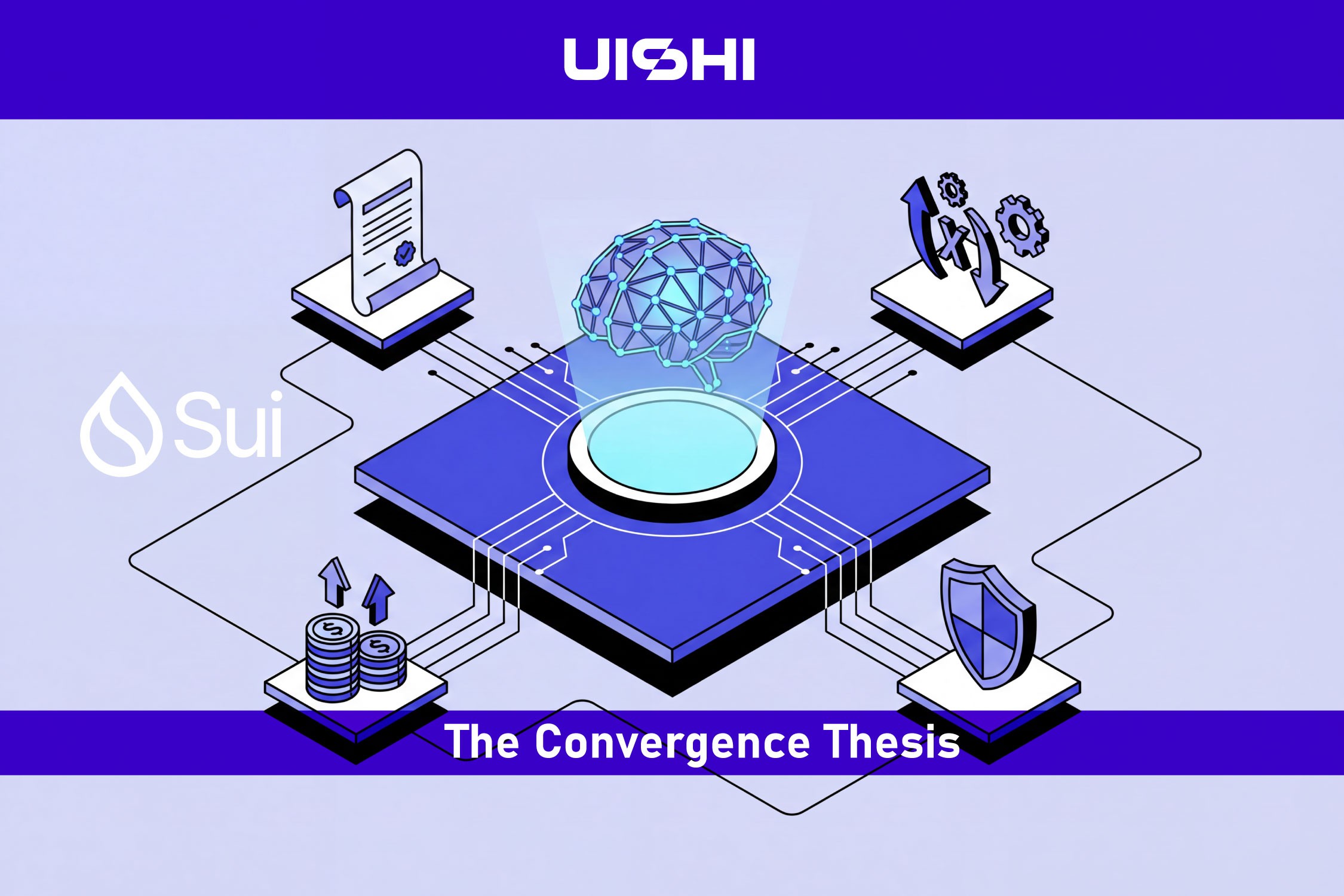
The convergence of AI, DeFi, and RWA creates leverage that none of these trends could achieve independently. AI optimizes DeFi strategies to generate higher yields. DeFi yields fund RWA acquisitions that provide diversification and stable income. RWA positions serve as collateral that enables additional DeFi leverage. The three pillars reinforce each other, creating a system where the whole exceeds the sum of the parts.
This convergence is not possible without all three components. AI without DeFi has no infrastructure to optimize. DeFi without AI cannot achieve the speed and sophistication that modern financial markets require. RWA without either is just another tokenization project without the integration benefits that create compound returns. The combination is unique to Uishi’s approach, and it creates value that competitors pursuing single-strategy approaches cannot match.
The convergence also creates defensive moats. Building one pillar is relatively straightforward; building all three and integrating them effectively is much harder. The systems that connect AI to DeFi, DeFi to RWA, and RWA back to AI require sophisticated design and careful implementation. These integration layers are the intellectual property and operational capability that Uishi is building, and they create sustainable advantage that simple feature cloning cannot replicate.
The Future of Convergence
The convergence thesis suggests that the future of finance belongs to integrated platforms that combine AI, DeFi, and RWA capabilities. The most successful organizations will be those that can navigate all three domains and create value from their interaction. This is the future that Uishi is building toward, and it is the future that members are participating in.
The timing of this convergence is significant. All three trends are reaching maturity simultaneously, creating a window where the full convergence can be implemented. Waiting too long means missing the opportunity; moving too fast means building on foundations that are not yet ready. Uishi’s development timeline is calibrated to capture this window, building capabilities in sequence that prepare for full integration.
Members who understand the convergence thesis can appreciate why Uishi is built the way it is and why the platform’s value proposition is more than the sum of its parts. They can see how their participation contributes to building something that will grow in value as the trends continue to unfold. This understanding creates conviction that supports long-term holding and active engagement, which in turn strengthens the community that makes Uishi valuable.
The convergence is happening. Uishi is where it converges. This is the opportunity that Uishi offers and the future that members are building together.
Three Transforming Trends
Several major trends are reshaping finance simultaneously, each powerful on its own, but together creating transformational change that will redefine how value is created, owned, and exchanged. The first trend is the emergence of artificial intelligence as a fundamental capability in financial services, enabling speed, scale, and optimization that human capabilities cannot match. The second trend is the maturation of decentralized finance into robust infrastructure that can handle significant value with reliability and transparency. The third trend is the tokenization of real-world assets, bringing traditional investments into the digital economy. Individually, each of these trends represents a significant opportunity; together, they create possibilities that exceed what any single trend could achieve.
Understanding these trends and their convergence is essential for appreciating Uishi’s strategic positioning. The project is not simply pursuing one opportunity among many; it is building at the intersection of three transformative forces, creating value that compounds as the trends reinforce each other. This convergence thesis explains why Uishi is built the way it is and why the combination of capabilities it provides cannot be replicated by pursuing any single trend in isolation.
The AI Transformation
Artificial intelligence has achieved capability thresholds that enable genuinely transformative applications in finance. Modern AI systems can analyze vast amounts of data, identify patterns across diverse sources, and make predictions that improve with experience. In financial applications, these capabilities translate to better market analysis, more sophisticated risk management, and more effective trade execution. The gap between AI-enabled and human-only financial operations is widening, and the gap is likely to continue widening as AI capabilities improve.
The key insight is that AI in finance is not about replacing humans but about augmenting human capabilities. The most effective financial organizations combine human judgment about strategy and risk with machine capabilities for execution and optimization. Humans set parameters and make important decisions; machines handle the countless tactical choices that must be made quickly and consistently. This division of labor produces results that neither humans nor machines could achieve alone.
For community-owned organizations like DAOs, AI offers the possibility of accessing institutional-grade capabilities without institutional-scale resources. By pooling resources and sharing AI infrastructure costs across many members, communities can achieve scale economies that individual members could never achieve alone. This democratization of AI capabilities is still in its early stages, but it represents one of the most significant opportunities in the current financial landscape.
The Maturation of DeFi
Decentralized finance has evolved from experimental prototypes to robust infrastructure that handles billions of dollars in value. Lending protocols provide reliable yield on deposited assets. Decentralized exchanges provide deep liquidity and fair prices. Stablecoins provide stable medium of exchange within the crypto ecosystem. The DeFi stack is comprehensive enough to support sophisticated financial operations, and it continues to improve as developers build new protocols and refine existing ones.
The maturity of DeFi creates a foundation on which more sophisticated applications can be built. Rather than needing to create every component from scratch, developers can leverage existing infrastructure and focus on the unique value they provide. This compositional capability is one of DeFi’s greatest strengths: protocols can be combined and integrated to create capabilities that exceed what any single protocol could provide.
For treasury management specifically, mature DeFi infrastructure enables strategies that would have been impossible just a few years ago. Yield optimization across lending protocols, liquidity provision across exchanges, and sophisticated rebalancing across strategies—all are possible with today’s DeFi infrastructure. The challenge is not whether the infrastructure exists but whether organizations can leverage it effectively, which is where AI capabilities become essential.
The RWA Revolution
Real-world asset tokenization is bringing trillions of dollars of traditional assets into the blockchain ecosystem. Real estate, private credit, commodities, and other asset classes are being represented as tokens that can be traded, fractioned, and programmed like other digital assets. This expansion of the investable universe creates opportunities for diversification, yield enhancement, and risk reduction that purely crypto-native portfolios cannot achieve.
The benefits of RWA integration extend beyond investment returns. Real-world assets often have low correlation with cryptocurrency prices, providing genuine diversification that reduces portfolio volatility. Income from real-world assets is typically predictable and stable, unlike the volatile returns of crypto-native strategies. Long-term appreciation in real-world assets provides capital preservation and growth that balances the speculative nature of cryptocurrency investments.
However, RWA integration also introduces complexity. Legal structures must be established to ensure compliant ownership. Custody arrangements must be managed to protect assets. Regulatory compliance must be maintained across jurisdictions. These challenges are surmountable, but they require specialized expertise and infrastructure that pure DeFi projects may lack. The integration of RWA capabilities with DeFi infrastructure requires careful design and significant investment.
Where the Trends Converge
The convergence of AI, DeFi, and RWA creates leverage that none of these trends could achieve independently. AI optimizes DeFi strategies to generate higher yields. DeFi yields fund RWA acquisitions that provide diversification and stable income. RWA positions serve as collateral that enables additional DeFi leverage. The three pillars reinforce each other, creating a system where the whole exceeds the sum of the parts.
This convergence is not possible without all three components. AI without DeFi has no infrastructure to optimize. DeFi without AI cannot achieve the speed and sophistication that modern financial markets require. RWA without either is just another tokenization project without the integration benefits that create compound returns. The combination is unique to Uishi’s approach, and it creates value that competitors pursuing single-strategy approaches cannot match.
The convergence also creates defensive moats. Building one pillar is relatively straightforward; building all three and integrating them effectively is much harder. The systems that connect AI to DeFi, DeFi to RWA, and RWA back to AI require sophisticated design and careful implementation. These integration layers are the intellectual property and operational capability that Uishi is building, and they create sustainable advantage that simple feature cloning cannot replicate.
The Future of Convergence
The convergence thesis suggests that the future of finance belongs to integrated platforms that combine AI, DeFi, and RWA capabilities. The most successful organizations will be those that can navigate all three domains and create value from their interaction. This is the future that Uishi is building toward, and it is the future that members are participating in.
The timing of this convergence is significant. All three trends are reaching maturity simultaneously, creating a window where the full convergence can be implemented. Waiting too long means missing the opportunity; moving too fast means building on foundations that are not yet ready. Uishi’s development timeline is calibrated to capture this window, building capabilities in sequence that prepare for full integration.
Members who understand the convergence thesis can appreciate why Uishi is built the way it is and why the platform’s value proposition is more than the sum of its parts. They can see how their participation contributes to building something that will grow in value as the trends continue to unfold. This understanding creates conviction that supports long-term holding and active engagement, which in turn strengthens the community that makes Uishi valuable.
The convergence is happening. Uishi is where it converges. This is the opportunity that Uishi offers and the future that members are building together.